
Walls are rarely just background. They shape how light moves through a space, how materials relate to one another, how easy the interior is to maintain and how much visual identity the project carries.
For architects and interior designers, the decision between wall tiles vs paint or wall panels should therefore be based on more than style. Each material system has strengths. Paint offers flexibility and simplicity. Panels can create warmth or acoustic depth. Wall tiles can deliver durability, texture, moisture resistance and strong material presence.

Start with Function Before Material
| Wall Condition | Primary Need | Likely Surface Direction |
|---|---|---|
| Dry Residential Wall | Flexibility, colour, easy refresh | Paint, tile or panel depending on design intent |
| Bathroom / Moisture-Prone Wall | Moisture resistance, cleaning | Suitable tile system |
| Feature Wall | Texture, identity, visual depth | Textured tile, decorative panel or specialist paint |
| Retail / Hospitality Wall | Durability, branding, maintenance | Tile or panel depending on traffic and visual language |
| Bedroom Wall | Warmth, softness, calm | Paint, wood-look tile or panel |
Paint: Flexible, Familiar and Easy to Change
Paint remains one of the most adaptable wall finishes because colour can be changed relatively easily and the surface can remain visually quiet. It works especially well on low-contact residential walls, ceilings and secondary surfaces where furniture or artwork should remain the focus.
Its limitation is that it does not naturally create the same physical depth as a carved, textured or shaped hard surface, and high-contact or moisture-prone locations may demand more careful product selection and maintenance.
Wall Panels: Warmth, Layering and Material Character
Panels can add timber warmth, acoustic softness, ribbed texture or decorative layering. They are useful in bedrooms, lounges, offices and hospitality projects, but edges, junctions, moisture response and long-term maintenance need to be detailed carefully.
Wall Tiles: A More Permanent Surface Strategy
Wall tiles create a hard, modular surface with defined joints and physical finish. Contemporary tiles can move beyond flat gloss through Shape, Matt Granula, Carving, Punch, wood-inspired and stone-inspired treatments.

Wall Tiles vs Paint
| Factor | Wall Tiles | Paint |
|---|---|---|
| Durability | Long-term hard-surface solution | Easier to refresh but may need repainting |
| Texture | Can include relief, carving and shape | Usually flatter unless specialist finishes are used |
| Moisture | Useful in suitable moisture-prone applications | Depends on paint type and wall condition |
| Maintenance | Often easy to wipe and clean | May show scuffs or require touch-ups |
| Flexibility | More permanent | Colour can be changed more easily |
Wall Tiles vs Panels
| Factor | Wall Tiles | Wall Panels |
|---|---|---|
| Surface Character | Stone, wood, carving, texture, gloss, matt | Timber, laminate, acoustic, upholstered or decorative |
| Moisture Suitability | Strong option where the selected tile is suitable | Depends heavily on panel type |
| Module | Tile grid and grout strategy | Sheets, slats or panel divisions |
| Maintenance | Generally straightforward | Varies by material |
| Visual Warmth | Can come through wood-look or warm stone designs | Often naturally strong with timber/fabric systems |
Texture Is Where Wall Tiles Become More Architectural
Paint can give colour. Panels can give layering. Textured tiles can create physical interaction with light.
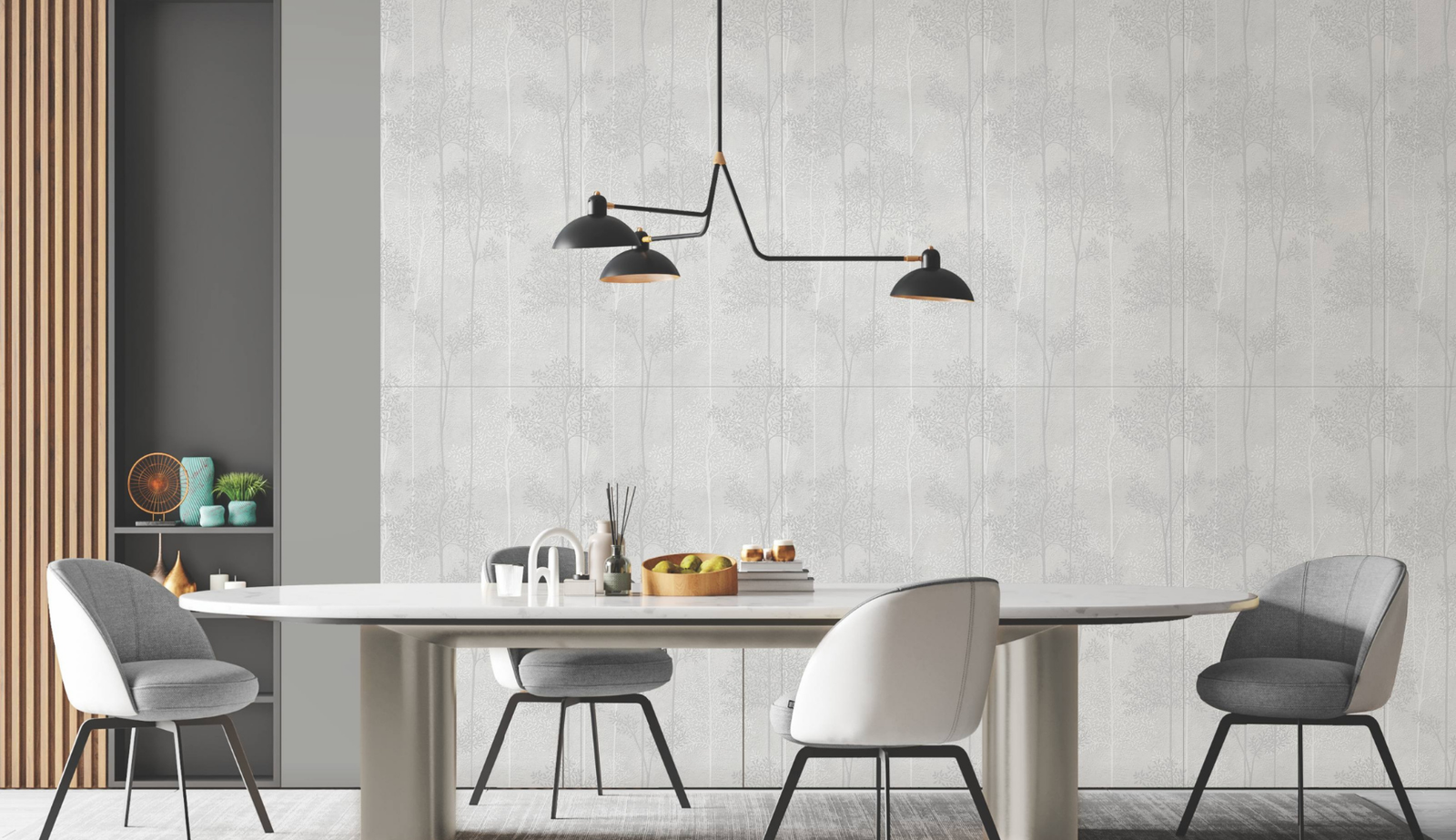
Capron’s Origin Collection works with Matt, Carving and Punch surface directions, allowing designers to create walls where relief and shadow become part of the composition.

Moisture Can Decide the Material Before Aesthetics Do
In bathrooms, spa areas and other moisture-prone conditions, the surface should be specified around actual use. Paint and panels may still be suitable in selected zones, but substrate, fixing, sealing, joints and intended application must be resolved first.
Wood-Look Tiles Can Bridge the Gap Between Tiles and Panels
One reason designers select panels is warmth. Wood-look tiles offer another way to introduce grain and natural rhythm while maintaining a tile-based surface system.
Capron’s Trace Collection uses soft wood grains, knots and tonal depth in a 600x1200mm format.

Which Surface Works Best for Which Interior?
| Interior | Recommended Direction |
|---|---|
| Minimal Living Room | Paint + one textured tile feature wall |
| Luxury Reception | Large-format tile or textured stone-inspired surface |
| Bedroom | Paint, wood-look tile or warm wall panel |
| Bathroom | Suitable wall tile system in moisture-prone areas |
| Café | Durable tile in high-contact zones + paint or panel elsewhere |
| Retail Store | Tile or panel feature wall depending on brand language |
The Best Projects Often Combine All Three
The choice does not always need to be tile or paint or panel. Many strong interiors use all three selectively. Paint can create calm backgrounds. Panels can add warmth or acoustic value. Tiles can carry high-contact, moisture-prone or visually important surfaces.
How to Choose Between Wall Tiles, Paint and Panels
1. Define the wall’s functional role
Is it decorative, high-contact, moisture-prone, easy to refresh or intended as a permanent feature?
2. Decide how much texture the room needs
If the interior already contains many materials, a quiet painted wall may be more effective than another statement surface.
3. Review maintenance expectations
Hotels, cafés, bathrooms and retail environments may need surfaces that tolerate more frequent cleaning.
4. Consider how permanent the design should be
Paint offers easier change. Tiles create a more permanent architectural layer.
5. Plan junctions early
Where paint, tile and panels meet, the transition should be detailed rather than improvised on site.
Wall Finish Specification Checklist
| Specification Item | Question to Resolve |
|---|---|
| Moisture | Will the wall face water, steam or repeated cleaning? |
| Contact | Will people, furniture or equipment frequently touch the wall? |
| Texture | Should the wall remain flat or create tactile depth? |
| Maintenance | How easily must the surface be cleaned or refreshed? |
| Lighting | Will the finish reflect, absorb or reveal texture? |
| Permanence | Should the finish be easy to change or designed for long-term use? |
| Junctions | How will it meet floors, ceilings, furniture and other wall finishes? |
Common Wall Finish Mistakes
Choosing by mood board only
The surface still has to respond to moisture, cleaning, touch and long-term use.
Making every wall a feature wall
Material hierarchy disappears when every surface tries to lead.
Ignoring transitions
Poor junctions between tile, panel and paint can make a high-quality interior feel unfinished.
Choose the Surface That Belongs to the Space
There is no universal winner between wall tiles, paint and panels.
Paint is useful when flexibility and visual quiet matter. Panels can add warmth, layering and softness. Wall tiles can deliver durability, texture and a more permanent architectural character.
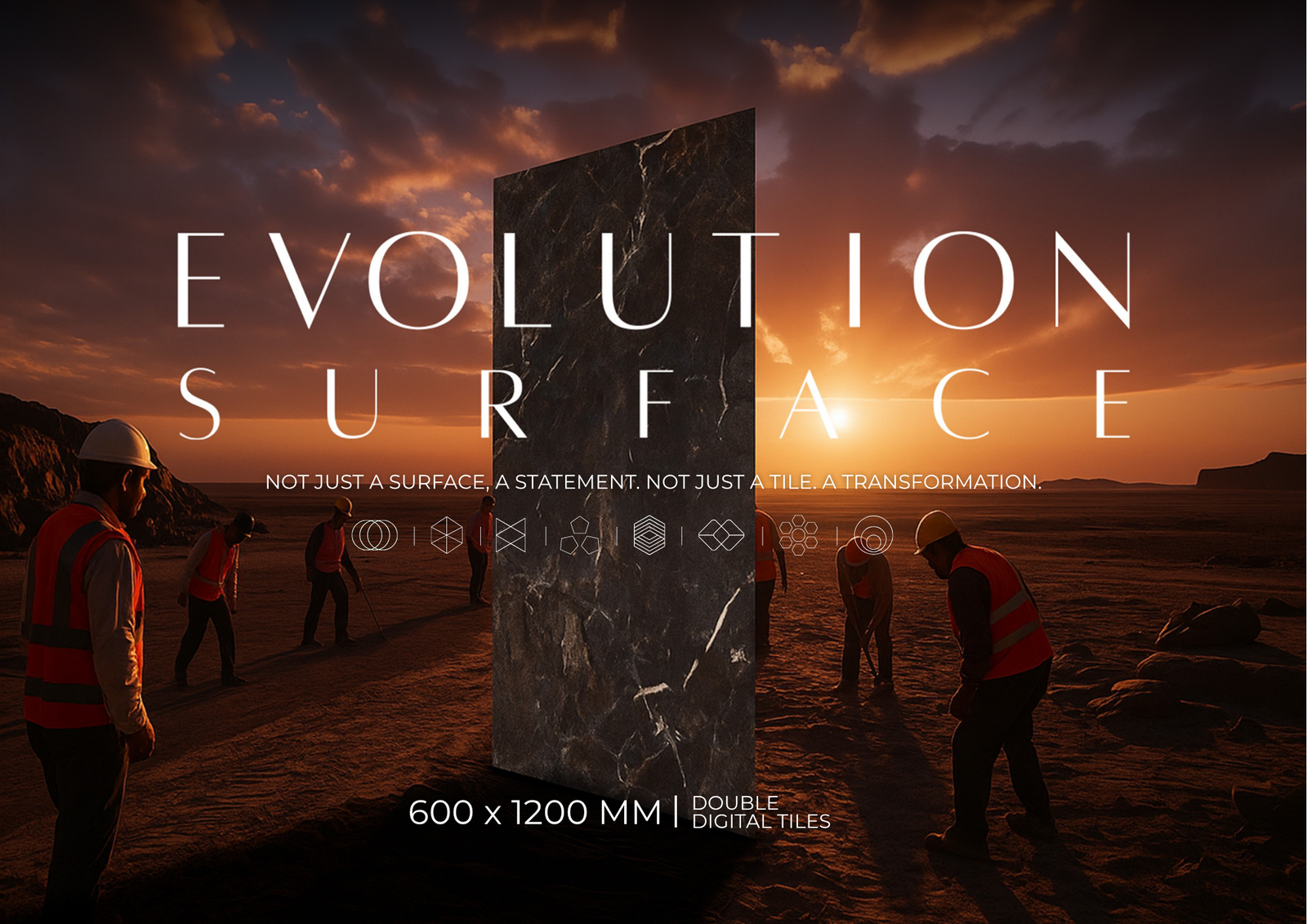
Across Capron’s Evolution Surfaces, architects and interior designers can work with shaped, matt, carving, punch, wood-inspired and other 600x1200mm directions to create walls that contribute more than colour alone.
Frequently Asked Questions
Are wall tiles better than paint?
They serve different purposes. Wall tiles can offer greater material depth, durability and moisture suitability in appropriate applications, while paint provides flexibility and easier colour changes.
Are wall tiles better than wall panels?
Not universally. Tiles are useful where durability and hard-surface maintenance matter. Panels can be effective where warmth, acoustics or softer visual layering is the priority.
Can wall tiles be used in living rooms?
Yes. Large-format, textured, stone-inspired and wood-look tiles can be used for living-room feature walls where the design calls for a more permanent material surface.
Are 600×1200 wall tiles suitable for feature walls?
Yes. The format can reduce visual joints and give texture, grain or stone movement more room to develop across the wall.
Can tiles and paint be used together?
Yes. Combining tiles on high-impact or high-contact walls with paint on quieter supporting surfaces can create a balanced material hierarchy.
Explore Capron Evolution Surfaces for walls designed as part of the architecture, not simply as a background.
Choose every finish with purpose: durability, texture, maintenance, light and material hierarchy should all support the complete space.