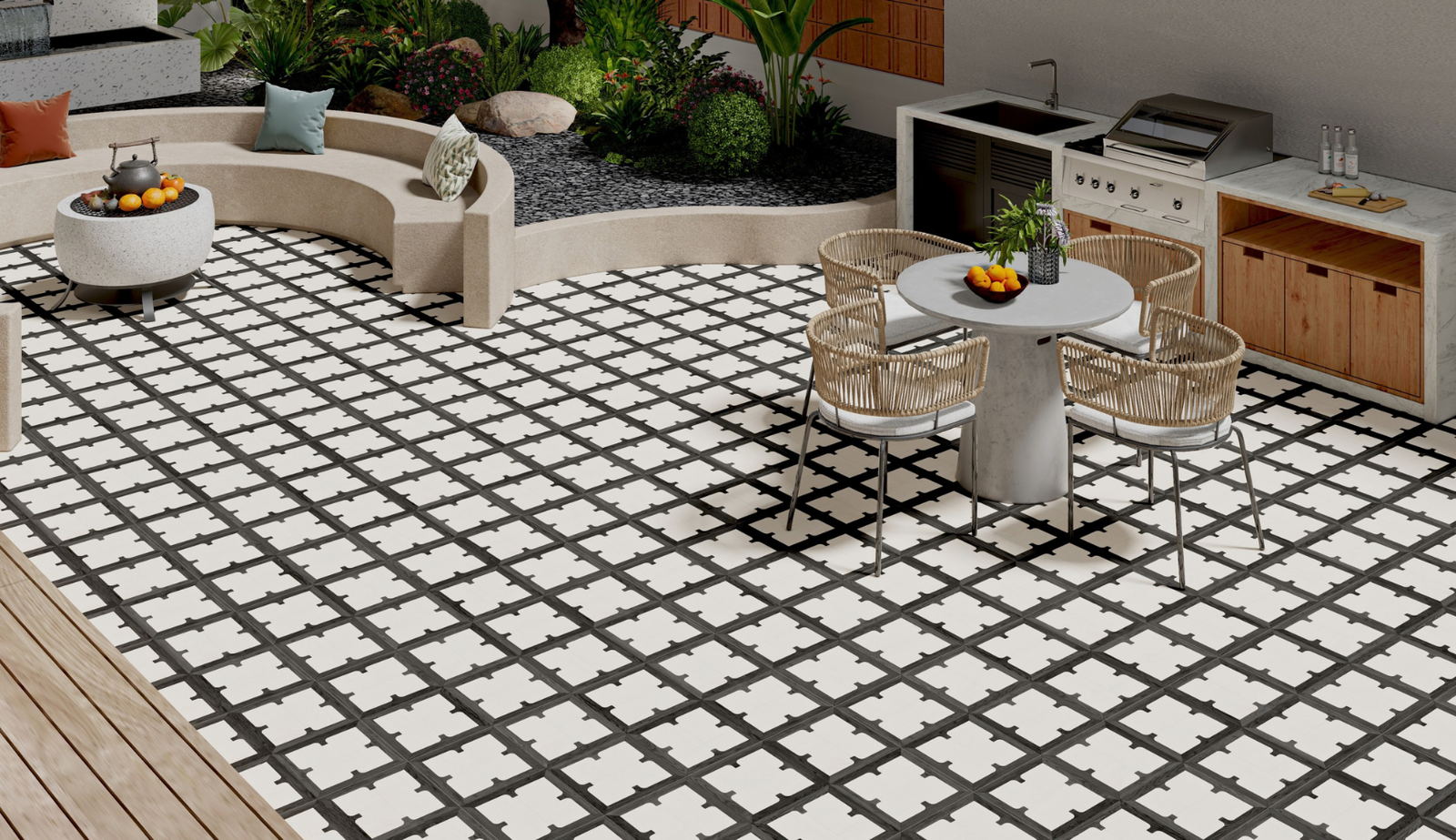


For most of 2026, US buyers of Indian tiles have been squeezed from two sides: record ocean freight and a tariff picture that changed three times in six months. This week, one of those pressures started to give. Spot rates from India to the US East Coast are dropping quickly, while the duty side has settled, for now, into a known stack. Here is what changed and how to use it in your next order.
What happened this week
On 23 October 2026, the Journal of Commerce reported that carriers on the India–US East Coast trade are cutting rates aggressively as customer bookings fall and bigger ships add capacity to the lane, with spot rates down by up to US$3,000 per 40ft container in two to three weeks. Ocean Network Express is also planning an extra-loader sailing from Nhava Sheva on 29 October. (Journal of Commerce, 23 Oct 2026)
The starting point is still high. In carrier data through 22 October, the Gateway spot index put the average all-in rate from India at US$9,378 per 40ft high-cube to the US East Coast (38 lanes), US$8,289 to the US West Coast and US$12,264 to the US Gulf. (Gateway Lines Ocean Freight Spot Rates Index)
The wider market points the same way. Xeneta’s chief analyst said on 23 October that US trades have peaked and are expected to soften through the rest of 2026. (Xeneta weekly update, 23 Oct 2026) The previous week, Hapag-Lloyd had already cut a spot rate on one India–US East Coast sailing to US$8,000 per 40ft. (The Loadstar, 16 Oct 2026)

The duty stack on Indian tiles today
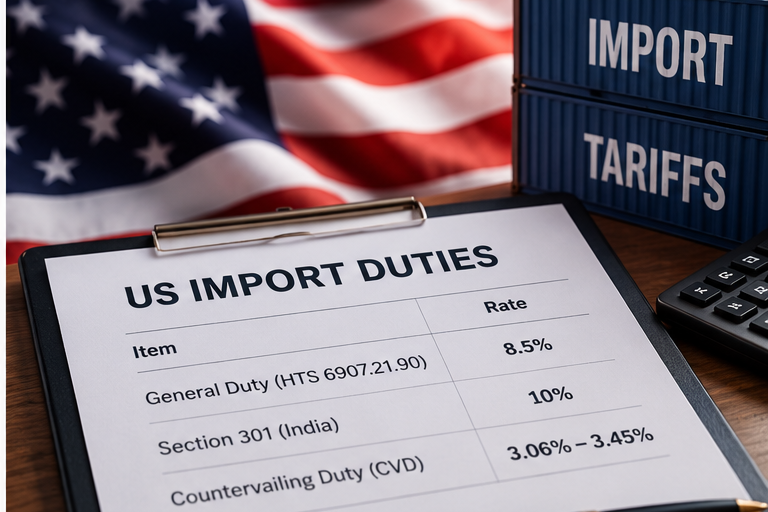
Freight is moving, but duties are what you pay on every container. For porcelain and glazed vitrified tiles (water absorption up to 0.5%), the US tariff schedule lists a general duty of 8.5% on subheading 6907.21.90, with some other 6907.21 lines at 10%. (USITC Harmonized Tariff Schedule)
On top of that, most goods of India have carried an additional 10% duty under Section 301 (heading 9903.05.44) since 24 July 2026. This duty is being challenged at the Court of International Trade, and no decision had been issued as of mid-October. (Spicemodo, 15 Oct 2026, citing CBP CSMS #69326983)
Ceramic tile from India also carries a countervailing (anti-subsidy) duty under the order Commerce issued in June 2025, with cash deposit rates of 3.45% for Antiqa Minerals, 3.06% for Win-Tel Ceramics and 3.18% for all other producers. Commerce did not impose anti-dumping duties. (Federal Register, Ceramic Tile From India: Countervailing Duty Order) The Tile Council of North America has warned that a pending court challenge by US producers could raise rates retroactively on unliquidated entries. (TCNA, 30 Mar 2026)
The trade deal is still not done
On 15 October, India’s Commerce Minister Piyush Goyal said the first tranche of the India–US trade deal had been finalised and was in legal drafting, to be put into effect once India has a competitive advantage over peer countries. A separate US Section 301 investigation into excess capacity is also under way and could lead to further tariffs. (The Hindu, 15 Oct 2026)
By 25 October, the interim pact was reported to be stuck: Washington wants to keep the 18% rate from the February framework, while New Delhi will not accept more than the current 10%, and India is inclined to wait until after the US mid-term elections. (BusinessLine, 25 Oct 2026) In plain terms: do not price your next order on a deal that has not been signed.
What the export numbers tell US buyers
The US is India’s second-largest tile market. In April–July 2026, India shipped ₹328 crore and 6.8 million square metres of tiles to the US, down 36.3% in value and 46.1% in volume on a year earlier, while average realisation rose 18.2% to ₹484 per square metre. In FY26 the US took ₹1,149 crore and 27.8 million square metres. (CeramicPost, India Ceramic Tile Exports: Monthly Data, from DGCI&S)
Meanwhile, Morbi’s factories are back in production after the spring fuel shortage, and exports remain held back mainly by freight. (CeramicPost, 5 Oct 2026) Capacity is available, freight is falling, and the duty stack is known. That is a better planning position than US importers have had all year.
What US importers should do now
1. Re-quote freight every week, lane by lane. A fall of up to US$3,000 per 40ft is a market direction, not your rate. Ask your forwarder for an all-in rate from Mundra, Pipavav or Nhava Sheva to your exact port, with surcharges listed separately and a clear validity date.
2. Buy FOB and price freight separately. With rates dropping week to week, a CIF price set today can lock in yesterday’s freight. An FOB quote from your Morbi supplier lets every freight cut flow straight into your landed cost.
3. Build landed cost on today’s duties, not tomorrow’s deal. Use the general rate for your exact HTS line, the 10% Section 301 duty and the CVD cash deposit for your supplier, and confirm each line with your customs broker before you confirm the order.
4. Keep a reserve for duty risk. Both the Section 301 duty and the CVD order are in court. Talk to your broker about how retroactive changes on unliquidated entries would affect you, and reflect that in your margins.
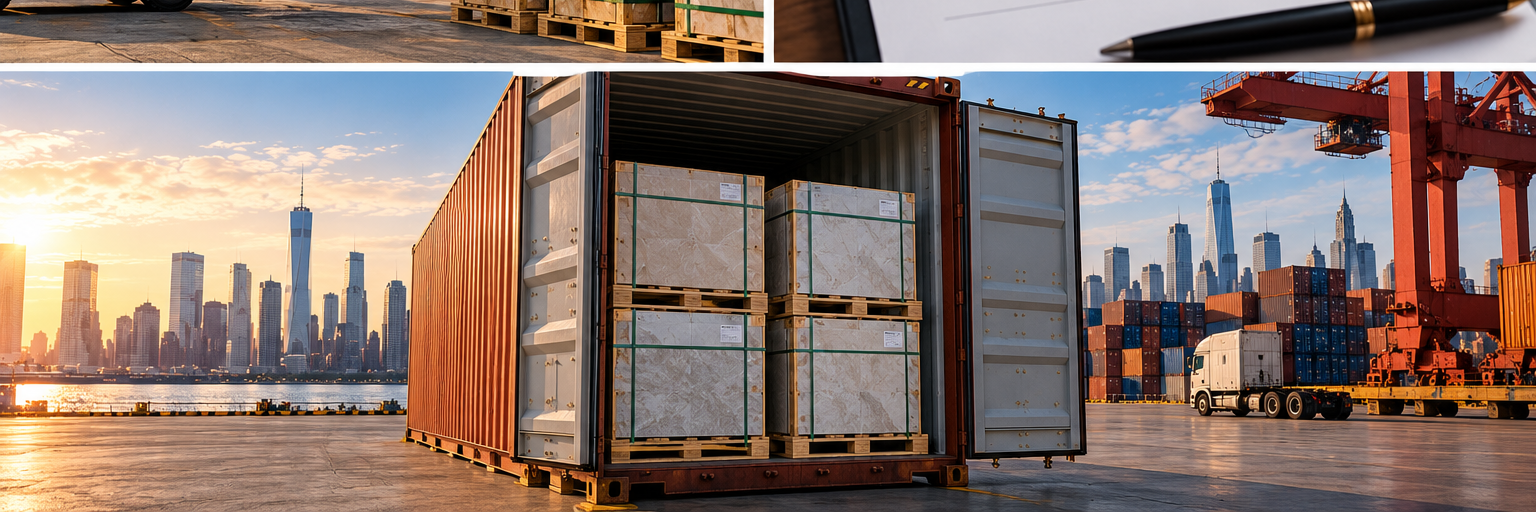
5. Lock specifications now, while factories have capacity. Confirm size, thickness, finish, shade, calibre marking, packing and pallet labels before production starts, and match the production date to a confirmed sailing so you do not pay for rollovers.
6. Look at value per container, not only price per square foot. When freight is a large share of landed cost, large-format tiles and well-packed containers help spread it. Ask your supplier for packing details and container loading per size.
How Capron Export can help
Capron Vitrified is a Morbi-based, ISO and CE certified manufacturer and exporter of vitrified and ceramic tiles, established in 2016, with large-format 600×1200 mm glazed vitrified ranges as our lead size. For high-traffic floors, our NOVA series has an anti-scratch GHR surface designed for heavy-use areas. We give clear FOB quotations, confirmed specifications, export packing and documentation, and production dates your forwarder can match to the sailings available on your lane.
Planning a US order for Q4 or early 2027? Contact Capron Export or message our export team on WhatsApp at +91 76220 25593. Share your destination port, sizes, finishes and monthly volume, and we will come back with an FOB quote and a production schedule.
Note: Freight rates and duty rates above are taken from the cited sources and can change at short notice. Confirm current rates, HTS classification and duties with your forwarder and customs broker before booking. This article is not legal or customs advice.