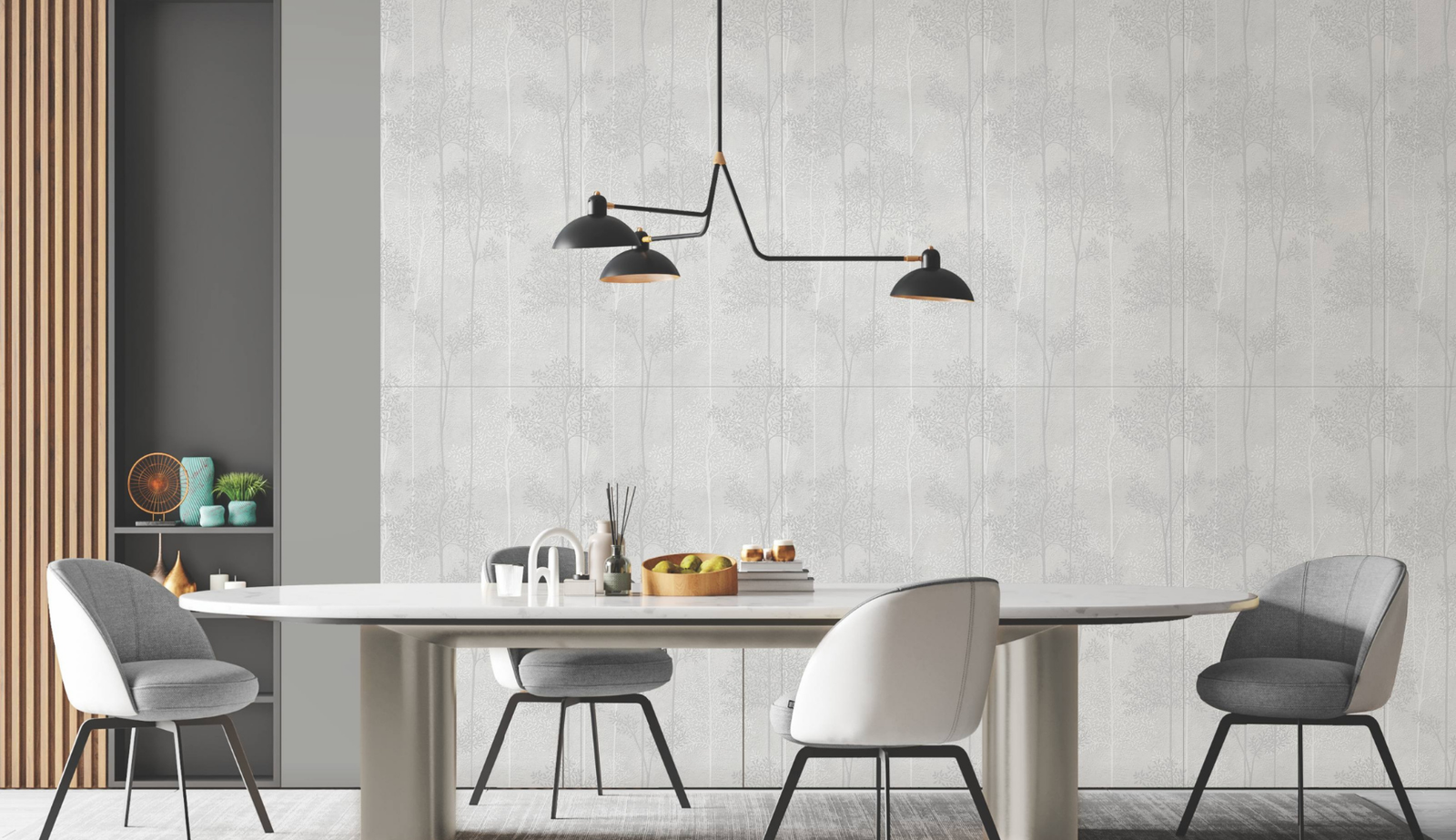



A bathroom is one of the few interiors where aesthetics, moisture, movement, cleaning and surface performance all meet in a compact space.
That makes bathroom tile design a specification exercise, not just a styling decision.
For architects and interior designers, the challenge is to create a bathroom that feels calm and refined while still considering wet zones, wall and floor hierarchy, traction, maintenance, lighting, joint planning and the long-term behaviour of every surface.
The right tile does more than make the bathroom look finished. It helps the room work better.

Start by Dividing the Bathroom into Surface Zones
Not every surface in a bathroom performs the same job.
The shower wall, dry vanity wall, main floor and feature wall all experience different levels of moisture, touch, cleaning and visual attention.
| Bathroom Zone | Main Requirement | Design Priority |
|---|---|---|
| Main Floor | Movement, cleaning, possible moisture | Appropriate traction, durability, easy maintenance |
| Shower / Wet Wall | High moisture exposure | Suitable application, cleanability, joint planning |
| Vanity Wall | Splash, close viewing | Texture, detailing, lighting, easy cleaning |
| Feature Wall | Visual focus | Scale, carving, texture or controlled pattern |
| Dry Wall | Lower moisture exposure | Material continuity and visual calm |
A bathroom works best when each surface is selected for the role it actually performs.
Safety Begins with the Floor Finish
In bathroom design, the floor should never be selected by appearance alone.
Moisture changes the way a surface behaves underfoot. This means traction, surface texture and the manufacturer’s intended application need to be considered before colour or pattern is finalised.
Capron’s Core Collection is presented with an anti-scratch surface and punch texture, and its catalogue references bathrooms among its application areas. The collection also describes enhanced traction as part of the surface direction.

Wall Tiles Can Carry More Visual Expression
Because bathroom walls do not experience the same foot traffic as floors, they offer more freedom for material expression.
This is where carving, shape, granula, punch and decorative surfaces can create depth without compromising the clarity of the room.
Capron’s Origin Collection uses Matt, Carving and Punch treatments, making it especially relevant for feature-wall thinking where the wall needs texture and light interaction rather than a loud print.
Texture Can Replace Excess Decoration
Bathrooms are compact spaces. Too many materials, colours and patterns can quickly make them feel smaller or visually chaotic.
A textured surface gives architects another option: keep the palette restrained, but let relief and shadow create depth.
Capron’s Air Plus Collection combines Shape + Matt Granula in 600x1200mm, creating a tactile surface language that works well when the aim is to add material character without introducing heavy pattern.

Should Bathroom Tiles Be Matt or Glossy?
There is no one finish that works everywhere.
The better approach is to match the finish to the surface role and lighting conditions.
| Finish | Strength | Consideration |
|---|---|---|
| Matt | Soft reflection, calm visual field | Useful for restrained interiors and selected floor/wall applications |
| Textured / Punch | Tactile depth and stronger surface character | Review cleanability and intended application |
| Carving | Physical detail and shadow | Works well on feature walls and close-view surfaces |
| Glossy | Brightness, reflection and stronger graphic impact |
Use carefully where glare or wet-floor suitability is a concern |
Glossy Walls Can Make Small Bathrooms Feel Brighter
A glossy wall tile can reflect more light and sharpen marble or stone-inspired graphics.
This can be useful in smaller bathrooms, powder rooms or premium vanity zones where the wall needs more luminosity.
However, the floor should still be specified independently according to the performance requirements of the space. A finish that works beautifully on the wall is not automatically the correct floor finish.

600x1200mm Tiles Can Make Bathroom Walls Feel More Continuous
Large-format 600x1200mm tiles can reduce the number of visible joints across a bathroom wall, giving the space a cleaner and more continuous appearance.
They also provide enough area for veins, texture or carving to develop more naturally than in smaller repetitive formats.
For architects, the real advantage is control over the module.
Align joints with the vanity
A clean horizontal or vertical relationship between tile joints and the vanity can make the room feel more resolved.
Coordinate with niches
Niche dimensions should be considered alongside the tile module so the final cuts look intentional.
Plan full-height walls early
Ceiling height, skirting, ledges and shower partitions all affect how the 600x1200mm grid should be set out.
Wall and Floor Do Not Need to Match Exactly
Material continuity is useful, but identical surfaces everywhere can make a bathroom feel flat.
A better strategy may be to keep the colour family connected while varying the finish.
Matt floor + textured wall
Creates depth while maintaining a consistent palette.
Neutral floor + glossy vanity wall
Lets reflected light create a focal point without affecting the rest of the room.
Stone-inspired floor + carved feature wall
Adds tactile character while keeping the overall design cohesive.
Lighting Should Reveal the Surface, Not Fight It
Bathrooms often combine downlights, mirror lighting, cove lighting and natural daylight.
Each affects the tile differently.
| Lighting Type | Surface Effect |
|---|---|
| Mirror Light | Can sharpen gloss and reveal detail at close range |
| Grazing Wall Light | Emphasises carving, punch and shaped textures |
| Warm Ambient Light | Enriches beige, stone and earthy tones |
| Strong Daylight | Can increase reflection and glare on glossy surfaces |
| Soft Diffused Light |
Creates a more restrained matt appearance |
Bathroom Tile Colour Should Support the Spatial Goal
Colour affects how compact or expansive a bathroom feels, but it should not be treated independently from finish and lighting.
Light neutrals
Ivory, beige and light grey can support a bright, open visual field.
Mid-tone stone colours
Can create a more architectural and grounded atmosphere without making the room too dark.
Dark feature walls
Can create drama when balanced with good lighting and lighter surrounding surfaces.
Warm natural tones
Can soften the technical feel of sanitaryware, glass and metal fixtures.
How to Specify Bathroom Tiles More Intentionally
1. Separate wet and dry zones
Do not assume every wall and floor area has the same performance requirement.
2. Select the floor first for performance
Traction, moisture and cleaning should lead the floor decision.
3. Use the wall for expression
Texture, carving and gloss can create stronger visual moments on vertical surfaces.
4. Plan the tile grid before plumbing is fixed
Niches, mixers, basins and shower partitions should relate to the final joint layout where possible.
5. Review the sample under bathroom lighting
A finish can look very different under warm mirror light than under showroom illumination.
Bathroom Tile Specification Checklist
| Specification Item | Question to Resolve |
|---|---|
| Wet / Dry Zone | What level of moisture exposure will the surface receive? |
| Floor Traction | Is the selected floor surface appropriate for the intended wet-area use? |
| Wall Finish | Should the wall be matt, glossy, textured, carved or punched? |
| Tile Size | How does the module relate to wall dimensions, niches and fittings? |
| Joint Layout | Are grout lines aligned with the architectural and plumbing elements? |
| Lighting | How will the finish react to mirror lights, daylight and wall washing? |
| Maintenance | Can the surface be cleaned easily in its intended location? |
| Manufacturer Guidance |
Is the tile recommended for the intended wall or floor application? |
Common Bathroom Tile Mistakes
Using the same finish on every surface
The wall and floor have different roles. They should be allowed to perform differently.
Choosing floor tiles only for appearance
Wet-area suitability and traction need to be considered before the visual decision is finalised.
Ignoring niches and fixtures during setting-out
Poorly aligned cuts around taps, niches and basins can weaken an otherwise premium design.
Overusing pattern in a small room
Compact bathrooms often benefit from one strong surface and several quieter supporting ones.
Forgetting maintenance
Deep texture and repeated joints can influence cleaning, so care requirements should be considered during specification.
A Better Bathroom Is Built Surface by Surface
The strongest bathrooms do not depend on one dramatic tile.
They work because the floor, wall, lighting, joints, fittings and texture all support the same spatial idea.
Across Capron’s Evolution Surfaces, architects and interior designers can work with anti-scratch punch, matt, carving, Shape + Matt Granula and glossy directions to build bathrooms around both performance and design intent.
Frequently Asked Questions
Which tiles are best for bathroom floors?
The best bathroom floor tile depends on moisture exposure, traction, maintenance and the manufacturer’s recommended application. Floor selection should be led by performance as well as aesthetics.
Are 600×1200 tiles suitable for bathroom walls?
Yes. The format can reduce visual joints and give stone veins, textures and carving more room to develop, provided the installation and wall conditions are appropriate.
Are glossy tiles good for bathrooms?
Glossy tiles can work well on bathroom walls where reflection and brightness support the design. Floor suitability should be assessed separately according to traction and wet-area requirements.
Can textured tiles be used in bathrooms?
Yes, where the selected product is recommended for the application. Texture can create depth on walls and selected floors, but maintenance and wet-area suitability should be reviewed.
Which colours make a bathroom look bigger?
Light neutrals such as ivory, beige and soft grey can help maintain a bright and open visual impression, especially when combined with good lighting and a controlled joint layout.
What should architects check before specifying bathroom tiles?
Review wet and dry zones, traction, surface finish, tile format, lighting, grout layout, niches, maintenance and the manufacturer’s recommended application.
Explore Capron Evolution Surfaces for bathrooms designed around both material character and everyday performance.
Specify every wall and floor with purpose: finish, safety, scale, light and use should all work together.