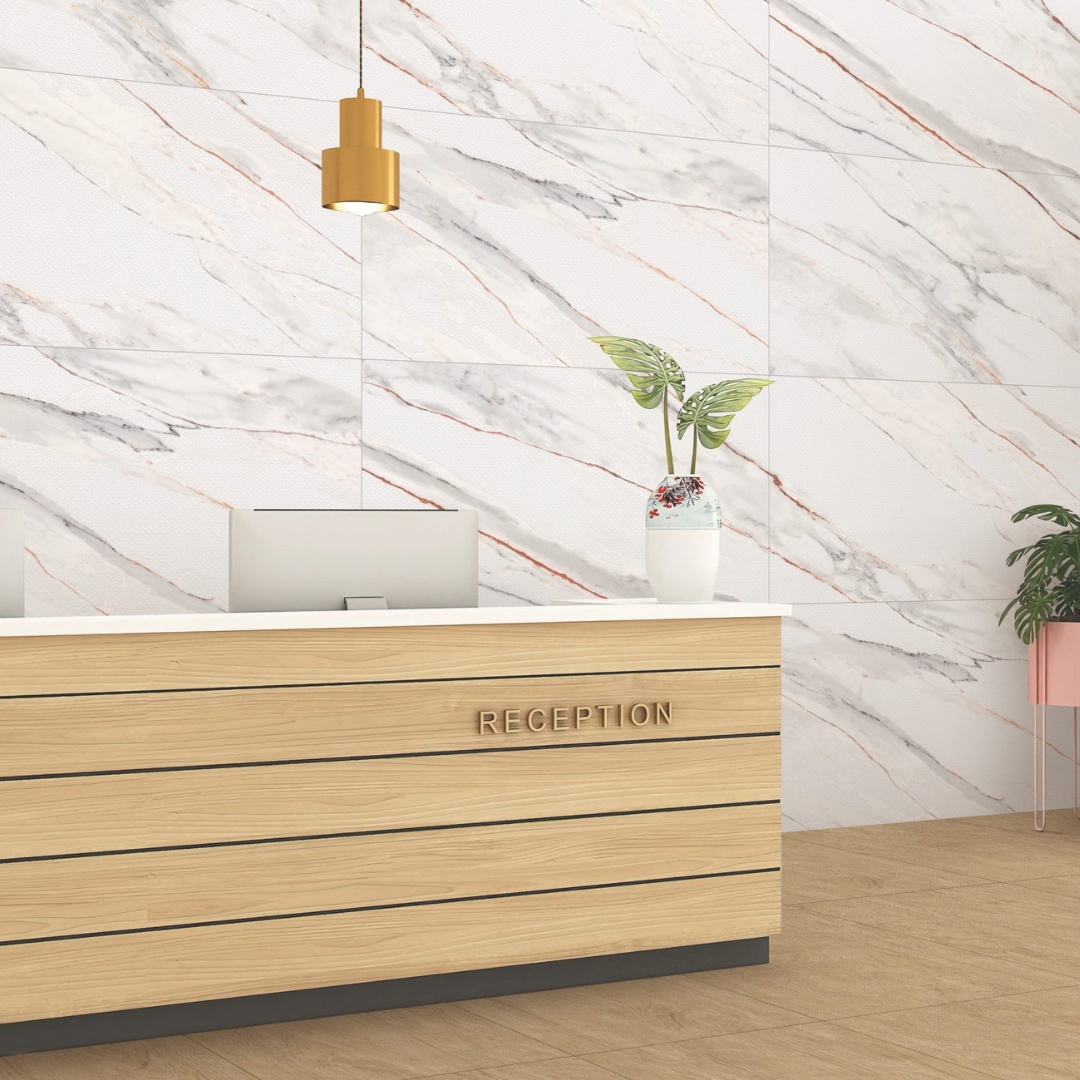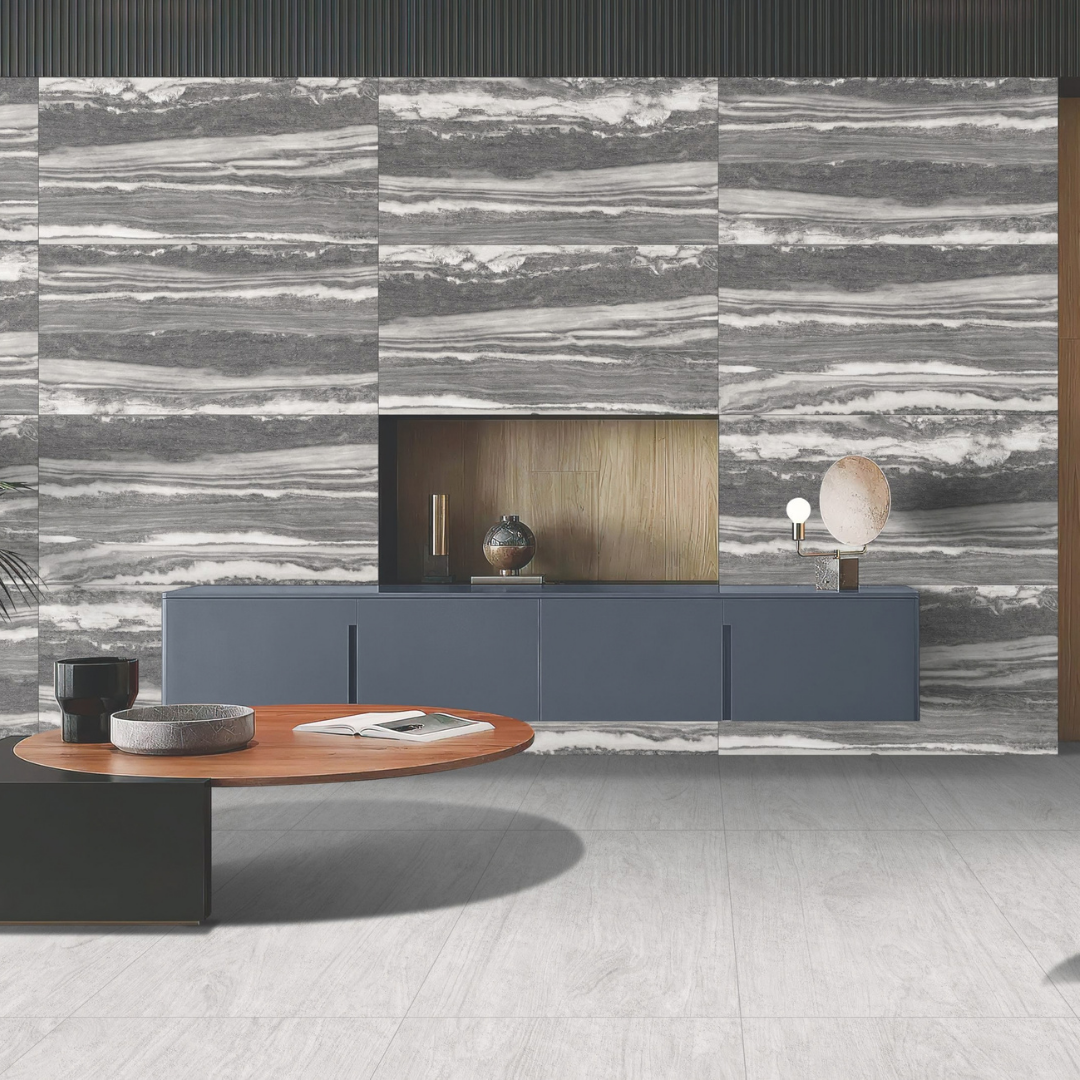


Canada is a market where tile buyers care about two things: a clear landed cost and tiles that meet North American test standards. India and Canada are also in the middle of trade talks that could change the duty picture, but a deal has not been signed. This guide sets out what an importer in Canada needs to know today, and what to plan for if the talks conclude.
What duty applies to porcelain tiles from India today
Under Canada's 2026 Customs Tariff, ceramic flags, paving and wall tiles fall under heading 69.07. For glazed tiles with a surface area of 103 cm² or more, which covers a 60x120 tile, the Most-Favoured-Nation (MFN) duty rate is 8%, and the same 8% applies whether the water absorption is up to 0.5% (porcelain), between 0.5% and 10%, or above 10%. (CBSA, Customs Tariff 2026, Chapter 69)
Goods from some developing countries enter under Canada's General Preferential Tariff (GPT), which shows duty-free for those same tile lines. India is not on Canada's published list of GPT beneficiary countries, so Indian tiles are charged the 8% MFN rate. (Government of Canada, unilateral tariff preference programs) Your customs broker will confirm the exact tariff line for your product, and GST/HST and any provincial taxes apply on top.
Is there an anti-dumping duty on Indian tiles in Canada?
At the time of writing, the Canada Border Services Agency's "Measures in force" list of anti-dumping and countervailing measures, which covers goods such as steel products, does not list ceramic or porcelain tiles. (CBSA, Measures in force) This is a contrast with some other destinations, such as the Gulf, where anti-dumping duties on Indian tiles run to 2031. Trade remedy lists can change, so check the list again before you place a large order.
What the India–Canada trade talks mean
India and Canada launched negotiations for a Comprehensive Economic Partnership Agreement (CEPA) in March 2026. According to BusinessLine on 6 November 2026, the Canadian trade minister was due in New Delhi for a sixth round of talks, with both sides aiming to announce conclusion during Prime Minister Modi's proposed visit to Toronto and Ottawa on 11–12 December. Legal vetting and formal ratification would follow. The same report says differences remain on market access, services and mobility, and that the two countries aim to raise two-way trade to C$70 billion a year by 2030. (BusinessLine, 6 Nov 2026)
What this means for you: nothing in the talks changes the 8% duty today. Even if a deal is announced in December, it would need legal vetting and ratification before tariffs change, and we have not seen the tile schedule. Do not price a 2027 order on a duty cut that has not been published. Do keep an eye on the news, and ask your supplier to keep your pricing flexible if the duty changes before your goods arrive.
Standards Canadian buyers ask for
Tile specifications in Canada commonly refer to ANSI A137.1, the American national standard for ceramic tile, which is widely used for imported tile. It is a product standard, not a building code. For level interior floors that will be walked on when wet, ANSI A137.1 calls for a wet Dynamic Coefficient of Friction (DCOF) of at least 0.42. (ANSI Blog, NFSI B101.3-2022 and ANSI A137.1) Canadian provincial building codes generally require floors that are suitable for their use and slip-resistant in wet areas, without naming one number. (Calgary Tiling, Alberta Building Code and slip resistance)
Practical advice: ask your supplier for test reports for the exact design you plan to buy, covering water absorption, breaking strength, abrasion and slip resistance, and check them against the specification of your project or the architect's schedule. Send the report to your customs broker and your distributor early, so there are no surprises at inspection.
A practical import checklist for Canada
1. Confirm the tariff line. Ask your customs broker to classify the exact tile (glazed or unglazed, size, water absorption).
2. Get all-in quotes. Compare FOB and CIF prices from the supplier with your own freight and clearance costs.
3. Check test reports. Match them to the standard your customer or architect has named.
4. Agree packing and marking. Confirm pallet sizes, carton labels and shade or batch numbers, so one project is not shipped in mixed shades.
5. Plan for shipping delays. Freight rates and sailings are still moving, so keep some flexibility in the order date.
Which tiles suit the Canadian market
Canadian projects often mix large-format floors with feature walls. Capron's lead size is large-format 60x120, and its range includes surfaces designed for different uses, such as VERSE, an anti-scratch matt surface for high-traffic areas, and 3D/4D surface designs in the AIR series (AIR, AIR PRO and AIR PLUS), which are anti-scratch and advisable for floor and wall. Ask which designs are currently available for export in the size you need.
Questions to ask any Indian supplier
- Are you ISO and CE certified, and can you share the certificates?
- What are your test reports for water absorption, breaking strength and slip resistance?
- What is your lead time, and which port do you ship from?
- How do you control shade variation across a large order?
- Can you supply samples before I place an order?
Enquire about Capron tiles for Canada
Capron Vitrified, established in 2016, is an ISO and CE certified manufacturer in Morbi, India, working with 200+ dealers, architects, interior designers and developers. If you are an importer, distributor or contractor in Canada, tell us your sizes, quantities and target port and we will respond with samples, a catalogue and a quotation.
Enquire through capronvitrified.com with your company name, country and the designs you are interested in.