
A hotel interior has to do something unusual: look exceptional while being used continuously.
Guests notice the lobby, corridors, rooms, bathrooms, restaurants and lounges as part of one experience. Operations teams, meanwhile, experience those same spaces through footfall, luggage, cleaning cycles, spills, moisture and daily maintenance.
For architects and interior designers, choosing the right tiles for hotel interiors means balancing luxury with durability, visual continuity with maintenance, and strong first impressions with long-term performance.

Hotel Tile Specification Should Begin with the Guest Journe
The best way to select hotel surfaces is to follow the guest through the property.
The lobby creates the first impression. Corridors carry repeated movement. Guest rooms need calm. Bathrooms need moisture-conscious specification. Restaurants and cafés combine visual identity with spills, furniture and heavy cleaning.
| Hotel Zone | Primary Need | Surface Direction |
|---|---|---|
| Lobby | Impact, scale, frequent movement | Large-format polished, stone-inspired or controlled statement surfaces |
| Corridor | Durability, continuity, easy maintenance | Restrained performance-led floor surface |
| Guest Room | Warmth, calm, comfort | Soft matt, wood-inspired or neutral surfaces |
| Bathroom | Moisture, traction, cleaning | Appropriate matt / textured floors and expressive wall surfaces |
| Restaurant / Café | Brand identity, spills, furniture movement | Durable floor with textured or decorative wall moments |
| Reception Feature Wall | Visual identity | Texture, carving, shape or selected gloss |
Lobby Tiles Need Scale and Visual Confidence
The hotel lobby sets expectations before the guest reaches the room.
Large-format tiles can help create a more continuous architectural base, particularly when designers want fewer visual interruptions across broad floor areas.
Glossy and polished surfaces can also amplify light and create a more formal sense of arrival. But reflection needs to be intentional, especially around glazing, chandeliers, spotlights and reception lighting.
A 600x1200mm format can give stone veining and tonal movement more room to develop, which is useful in large hospitality interiors where the material will be viewed from a distance.
Reception Walls Can Carry the Brand Character
The reception wall is often one of the strongest surfaces in a hotel.
Rather than relying on additional décor, architects can use texture, relief or shaped finishes to create identity through the surface itself.
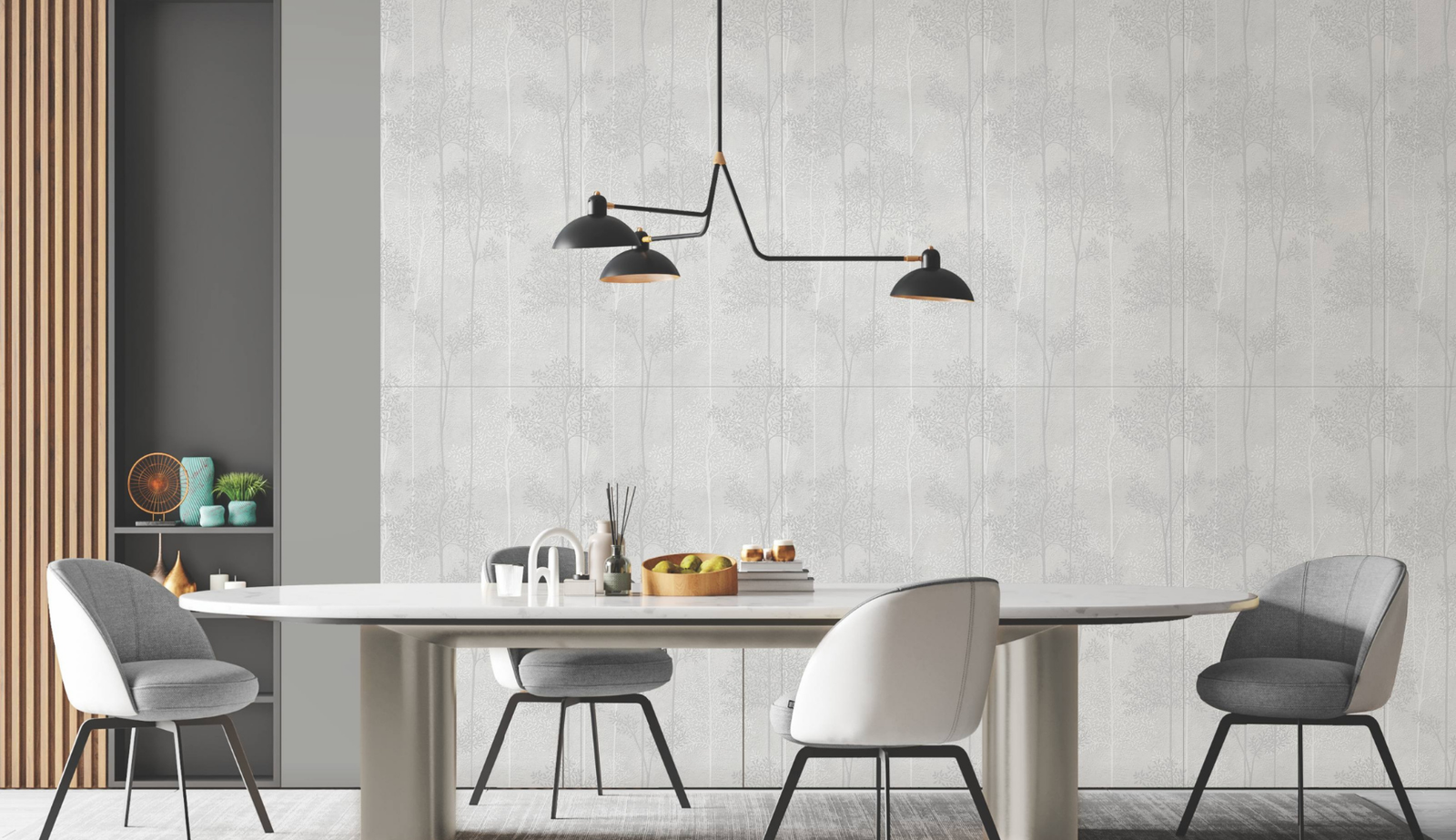
Capron’s Air Plus Collection uses Shape + Matt Granula and is presented for applications including hotels, showrooms, spas and cafés. This kind of tactile surface can create depth while keeping the palette relatively restrained.

Hotel Corridors Should Feel Calm, Not Generic
Corridors are high-use spaces, but they should not feel purely utilitarian.
The floor needs to respond to repeated footfall and luggage movement, while the overall material language should still connect with the lobby and guest rooms.
A neutral stone-inspired floor can provide continuity without competing with signage, lighting, artwork or room entrances.
The key is to create visual discipline rather than make every corridor surface decorative.
Guest Rooms Need Warmth More Than Drama
A guest room should feel calmer than the lobby.
Wood-inspired and warm neutral surfaces can help soften the hard edges of furniture, lighting and sanitary finishes.
Capron’s Trace Collection uses a 600x1200mm wood-inspired format with soft grains, knots and tonal variation. In hospitality interiors, this type of surface can introduce warmth in feature walls, lounges or selected room applications while maintaining a consistent tile-based material system.

Hotel Bathrooms Need Separate Wall and Floor Strategies
The bathroom should not be specified as one uniform surface system.
The floor has performance priorities such as moisture response and traction. The walls can carry more visual expression through texture, carving, gloss or stone-inspired graphics.
Architects should review wet and dry zones separately, check the manufacturer’s recommended application, and plan joints around vanities, niches, shower screens and fixtures.
Restaurants and Cafés Need More Than a Beautiful Floor
Hotel F&B spaces experience chair movement, spills, concentrated circulation and frequent cleaning.
For these zones, appearance needs to work together with maintenance and durability.
Warm matt or textured walls can create atmosphere, while the floor should be selected according to real use conditions rather than only the visual concept.
High-Traffic Hospitality Areas Need Performance from Day One
A hotel floor may experience guests, luggage wheels, service trolleys, events and continuous cleaning.
Capron’s Core Collection uses an anti-scratch surface with punch texture in 600x1200mm and is positioned for high-traffic applications.

For architects, the important distinction is that durability should be built into the design language rather than added as an afterthought.
Glossy, Matt, Textured or Wood-Look: Which Works Where?
| Finish | Best Hotel Use | Design Consideration |
|---|---|---|
| Glossy / Polished | Lobby, selected reception areas, premium public zones | Reflection, glare and maintenance visibility |
| Matt | Guest rooms, corridors, quieter hospitality zones | Soft reflection and calm visual character |
| Textured / Shape | Reception walls, lounges, spa areas, restaurants | Works strongly with directional lighting |
| Wood-Look | Guest rooms, lounges, feature walls | Introduces warmth and linear movement |
| Performance-Led Punch | High-use circulation and demanding zones | Review intended application, traction and maintenance |
Maintenance Is Part of the Guest Experience
A hotel is cleaned constantly.
That makes maintenance a design issue, not only an operations issue.
A surface that shows every mark, requires difficult cleaning or ages inconsistently can affect the perception of the entire property.
Architects and interior designers should therefore understand the expected cleaning regime before finalising finishes.
Lobby
Consider dirt from entrances, luggage and high visibility under bright lighting.
Corridors
Review repeated trolley and luggage movement and how joints will age visually.
Restaurants
Consider spills, furniture movement and cleaning frequency.
Bathrooms
Review moisture, soap residue, grout and daily housekeeping practices.
Material Continuity Should Not Mean Repeating One Tile Everywhere
Hotels benefit from a connected material language, but every zone does not need the same surface.
A stronger strategy is to maintain relationships in tone, format or texture while adapting the finish to each function.
For example, the project might use polished stone-inspired surfaces in the lobby, matt neutral floors in corridors, wood-inspired walls in rooms and textured surfaces in restaurants or spa areas.
The hotel still feels cohesive, but every material has a reason to be where it is.
Hotel Tile Specification Checklist
| Specification Item | Question to Resolve |
|---|---|
| Guest Journey | How does the material language move from lobby to room? |
| Traffic | Which zones receive the highest movement and service use? |
| Finish | Where should surfaces reflect light, remain quiet or add texture? |
| Tile Scale | How does the format relate to large public areas and smaller guest spaces? |
| Wet Areas | Are bathroom floor and wall surfaces specified according to moisture and use? |
| Lighting | How will lobby, corridor and room lighting alter the finish? |
| Maintenance | What housekeeping and cleaning regime will the surface experience? |
| Transitions | How do tiles meet carpet, timber, thresholds and other hospitality materials? |
Common Hotel Tile Specification Mistakes
Making every public area glossy
Premium does not automatically mean reflective. Texture and restraint can create equal or greater sophistication.
Using the same surface in every zone
Material continuity is valuable, but performance and atmosphere vary across a hotel.
Ignoring luggage and service movement
Guest circulation is only one part of the wear a hospitality floor experiences.
Choosing bathroom tiles without separating wall and floor requirements
The two surfaces have different technical and visual roles.
Designing for opening photographs instead of long-term use
A hotel is judged every day after launch, not only when it is new.
Hospitality Luxury Is Built on Surfaces That Keep Working
The strongest hotel interiors balance atmosphere with operation.
They create memorable material moments without making every surface a statement. They use polished surfaces where reflection helps, textured surfaces where depth matters, wood-inspired finishes where warmth is needed and performance-led materials where traffic is highest.
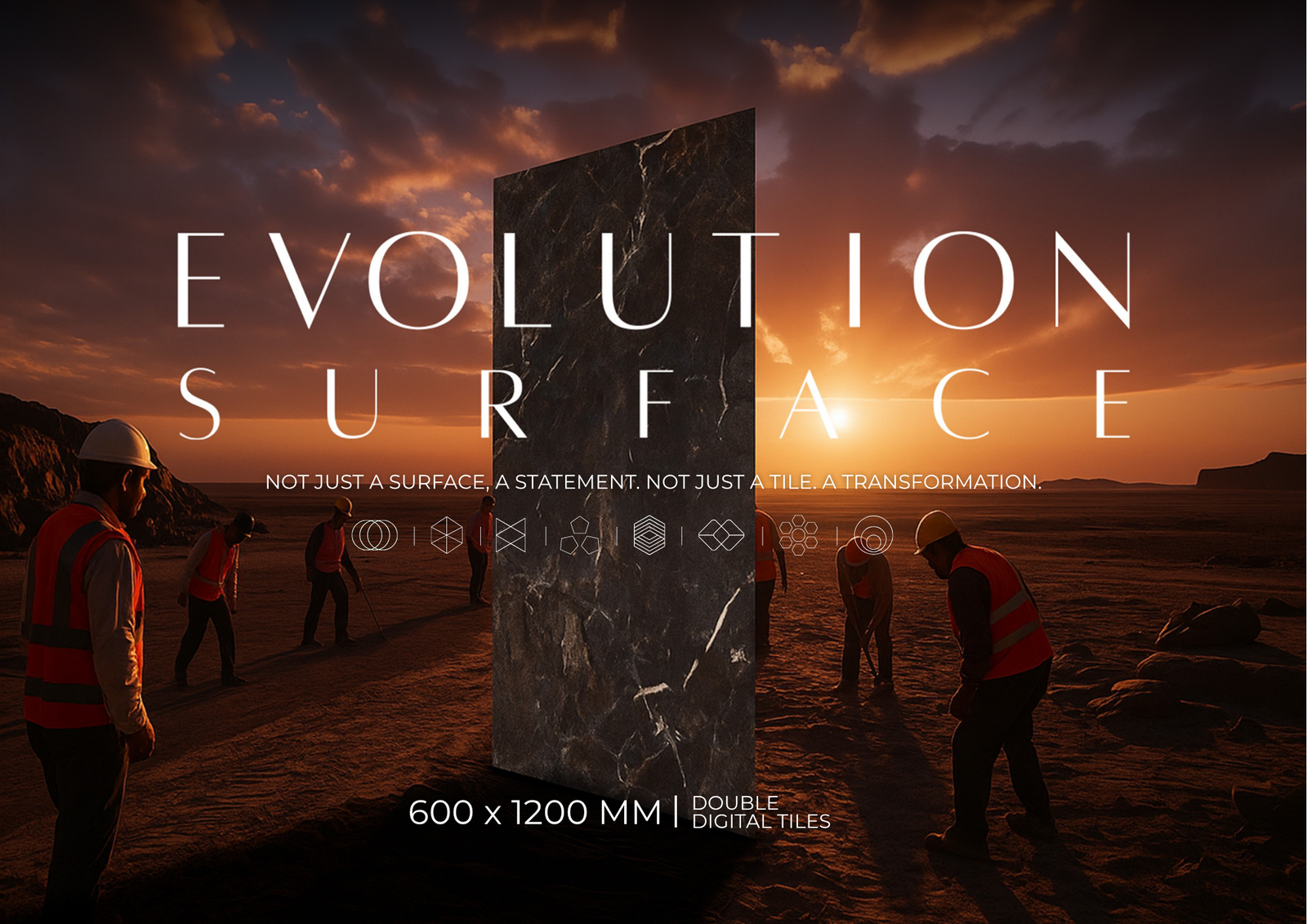
Across Capron’s Evolution Surfaces, architects and interior designers can work with glossy, textured, wood-inspired and anti-scratch directions in the 600x1200mm format to create hospitality interiors that feel connected without becoming repetitive.
Frequently Asked Questions
Which tiles are best for hotel interiors?
The right tile depends on the zone. Lobbies may use polished or large-format surfaces, guest rooms may benefit from matt or wood-inspired finishes, and high-traffic or wet areas should be selected around their performance requirements.
Are 600×1200 tiles suitable for hotel lobbies?
Yes. The large format can reduce visual joints and allow stone, marble and textured designs to develop across broader surfaces, subject to correct installation planning.
Which tiles are suitable for hotel corridors?
Corridor surfaces should be selected around repeated traffic, luggage movement, maintenance and the intended design language. Calm, durable surfaces are often more effective than highly decorative ones.
Can wood-look tiles be used in hotel rooms?
Yes, where the product is suitable for the intended wall or floor application. Wood-inspired surfaces can create warmth while maintaining a tile-based material system.
Are glossy tiles suitable for hotel bathrooms?
Glossy tiles can work well on selected bathroom walls. Floor suitability should be evaluated separately according to moisture, traction and manufacturer guidance.
What should architects consider when specifying hotel tiles?
Review traffic, finish, lighting, maintenance, wet-area requirements, joint layout, transitions, tile scale and the relationship between public and private zones.
Explore Capron Evolution Surfaces for hospitality interiors that need to look exceptional and perform every day.
Design every zone around the guest experience, the operational reality and the surface performance the project demands.