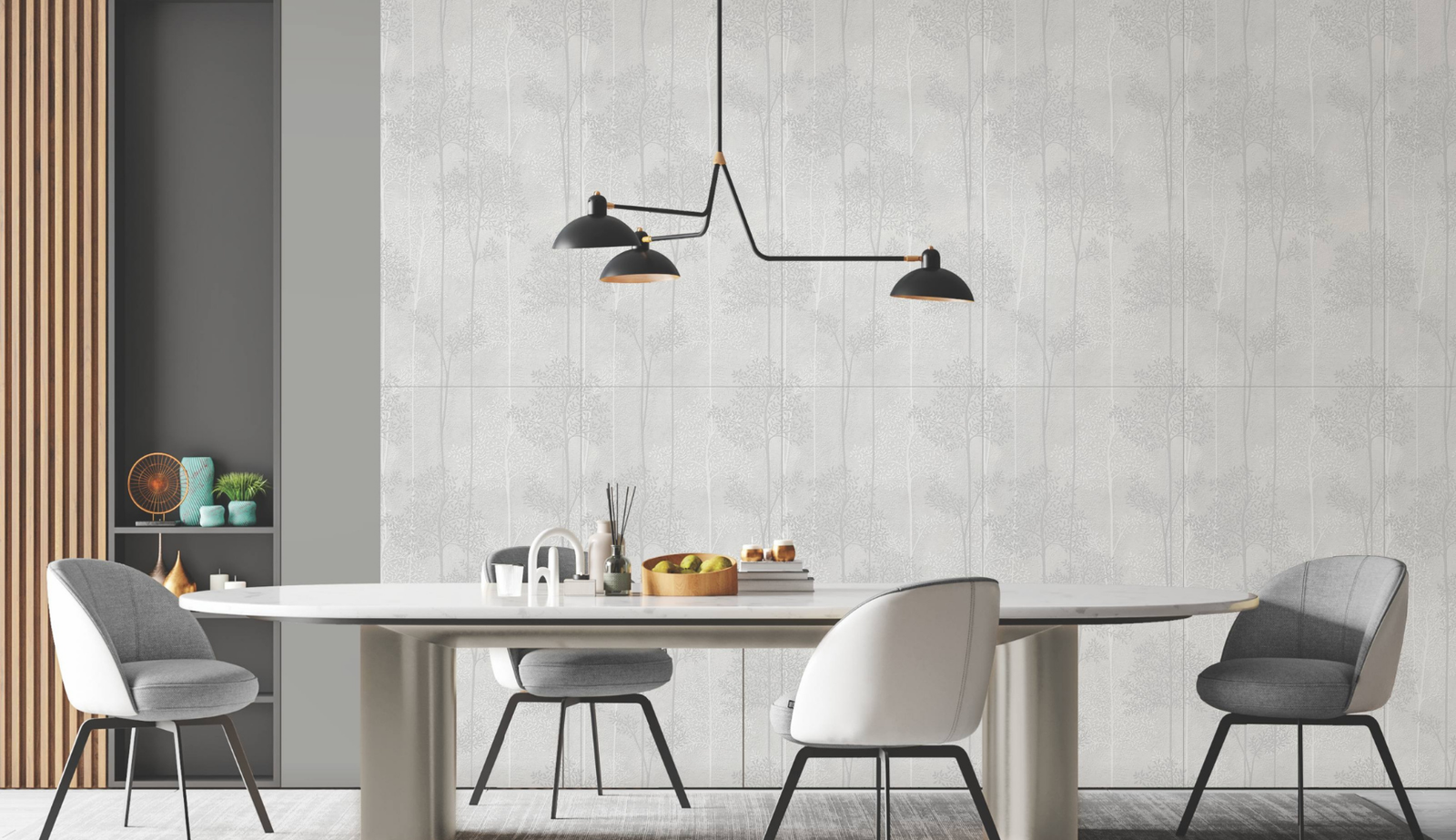



A café or restaurant is one of the most demanding interiors to design well.
The space needs atmosphere, identity and visual recall. At the same time, the floor and walls deal with chairs, tables, spills, cleaning, staff movement, customer circulation and long operating hours.
For architects and interior designers, choosing restaurant tiles or café tiles is therefore a balance between brand expression and operational reality.
The right surface should help define the experience without becoming difficult to maintain once the doors open.

Start by Mapping the Restaurant into Usage Zones
A restaurant is not one uniform environment.
The entrance, dining area, bar, service path, washroom and outdoor seating zones all experience different traffic patterns and surface demands.
| Zone | Typical Stress | Specification Focus |
|---|---|---|
| Entrance | Footfall, outdoor dust, first impression | Durability, easy maintenance, visual identity |
| Main Dining | Chair movement, spills, customer traffic | Scratch resistance, stain response, comfort of visual tone |
| Bar Area | Spills, standing traffic, lighting | Maintenance, surface character, visual drama |
| Service Route | Repeated staff movement, trolleys | Performance, continuity, cleanability |
| Washrooms | Moisture, cleaning | Wet-area suitability, traction, maintenance |
| Feature Wall | Visual focus | Texture, colour, lighting and brand character |
High Footfall Changes the Floor Specification
The dining floor experiences more than walking.
Chairs scrape, tables move, cleaning happens repeatedly and dirt is carried in from outside. These conditions should influence the surface specification from the beginning.
Performance-led options can be useful where the floor needs to maintain its visual quality under repeated use.
Capron’s Core Collection uses an anti-scratch surface with punch texture in 600x1200mm, making it relevant to high-use commercial environments where durability and material character need to work together.
Texture Can Build Atmosphere Without Making the Space Busy
Restaurants often contain many visual elements: menus, lighting, furniture, signage, tableware and branding.
If every surface is also highly patterned, the interior can become overwhelming.
Textured walls offer another route. They create depth through shadow and tactile relief while allowing the colour palette to remain restrained.
Capron’s Air Plus Collection combines Shape + Matt Granula in 600x1200mm and is positioned for applications including cafés and hotels.

Use the Wall to Carry More Brand Character
The floor usually needs to work hard. The walls often have more freedom to express the concept.
This makes feature walls ideal for stronger texture, colour, carving, shape or even a controlled glossy finish.
A coffee bar backdrop, dining wall, waiting area or reception surface can become the visual anchor of the project.
Wood-Look Tiles Can Make Hospitality Spaces Feel Warmer
Restaurants and cafés can become visually cold when too many surfaces are stone, glass, metal and ceramic.
Wood-inspired tiles introduce grain, warmth and linear movement while keeping the material system within tile.
Capron’s Trace Collection uses a 600x1200mm wood-inspired format with soft grains, knots and tonal depth.

Restaurant Lighting Should Be Planned with the Tile Finish
Hospitality spaces often rely heavily on lighting to create mood.
The same tile can look completely different under daytime daylight and warm evening lighting.
| Lighting Condition | Tile Response |
|---|---|
| Warm pendant light | Enhances beige, wood and earthy tones |
| Grazing wall light | Reveals texture, carving and relief |
| Focused spotlights | Creates highlights and stronger contrast |
| Large daylight glazing | Can increase glare on glossy surfaces |
| Low ambient lighting | Can deepen colour and reduce subtle surface detail |
For this reason, tile samples should ideally be reviewed under lighting similar to the final restaurant conditions.
Gloss Can Work, but It Should Have a Clear Role
Glossy surfaces can add brightness and visual polish to selected hospitality zones.
A bar front, washroom wall, entrance feature or formal dining surface may benefit from stronger reflection, especially where stone or marble-inspired graphics are part of the concept.

The key is not to use gloss everywhere. Reflection should support the spatial hierarchy, not dominate it.
Choose Different Surfaces for Different Hospitality Styles
| Hospitality Style | Surface Direction |
|---|---|
| Minimal Café | Warm neutral matt floor + subtle textured wall |
| Premium Restaurant | Stone-inspired large-format surfaces with controlled gloss |
| Casual Dining | Durable neutral floor + wood or textured accents |
| Industrial Café | Grey stone, concrete-inspired or dark textured surfaces |
| Warm Boutique Restaurant | Wood-look feature surfaces + softer neutral floor |
| High-Energy Bar | Darker surfaces, selective gloss and stronger directional lighting |
Large-Format Tiles Can Make Restaurants Feel More Cohesive
The 600x1200mm format can help reduce visual fragmentation across larger floors and walls.
This is especially useful in open-plan cafés and restaurants where the designer wants the dining, waiting and circulation areas to feel connected.
A larger module also gives texture, stone movement and wood grain more space to develop before being interrupted by a joint.
Maintenance Should Be Designed into the Concept
Hospitality surfaces are cleaned constantly.
That makes maintenance part of the design strategy.
Before approving a tile, architects should consider:
Spills
What kinds of food, drinks and cleaning agents will the surface encounter?
Furniture movement
How often will tables and chairs be moved?
Cleaning frequency
Will the floor be cleaned several times a day?
Surface relief
Will deep texture make maintenance more difficult in the proposed location?
Entrance dirt
How will dust and grit be controlled before they spread across the dining floor?
Restaurant Tile Specification Checklist
| Specification Item | Question to Resolve |
|---|---|
| Traffic | Which areas receive the highest customer and staff movement? |
| Spill Risk | Where are food and drink spills most likely? |
| Floor Finish | Does the surface suit the actual use and maintenance conditions? |
| Wall Finish | Where can texture, gloss or wood-look surfaces add character? |
| Lighting | How will the tile look during daytime and evening operation? |
| Tile Format | Does the module support the seating layout and architectural grid? |
| Joint Layout | How will grout lines relate to counters, walls and circulation? |
| Maintenance | Can the surface support the restaurant’s cleaning routine? |
Common Café and Restaurant Tile Mistakes
Choosing the floor from a mood board alone
The material needs to survive real service conditions, not just match the concept image.
Using too many patterns
Hospitality interiors already contain many visual layers. Give the eye somewhere to rest.
Ignoring chair movement
Dining floors receive repeated furniture movement that should be considered during specification.
Making every wall a feature wall
One or two strong surfaces usually create more impact than decorating every wall differently.
Ignoring night-time lighting
Many restaurants are experienced mainly after sunset, so the material should be evaluated under evening lighting.
Design for Atmosphere and Operations Together
The strongest hospitality interiors do not separate aesthetics from performance.
The floor is durable but still contributes to the design. The walls create identity without becoming noisy. The lighting reveals texture. The material palette supports the brand and remains practical for staff to maintain.
Across Capron’s Evolution Surfaces, architects and interior designers can work with anti-scratch, textured, wood-inspired and glossy 600x1200mm directions to build cafés and restaurants around both experience and everyday use.
Frequently Asked Questions
Which tiles are best for restaurants?
The right tiles depend on traffic, spills, cleaning frequency, lighting and the design concept. High-use floors should be selected around performance, while walls can carry more texture and visual expression.
Are vitrified tiles suitable for cafés and restaurants?
They can be suitable for many hospitality applications when the selected product is recommended for the intended use and meets the project’s maintenance and performance requirements.
Are 600×1200 tiles suitable for restaurant floors?
They can create visual continuity and fewer joints across larger areas, provided the format, substrate and installation method are appropriate for the project.
Can wood-look tiles be used in cafés?
Yes. Wood-inspired surfaces can create warmth on selected walls and floors where the specific product is suitable for the intended application.
Are textured tiles good for restaurant walls?
Yes. Texture can create depth through light and shadow without relying on strong pattern, making it effective for feature walls, bar areas and reception surfaces.
What should architects consider when specifying restaurant tiles?
Review traffic, spills, furniture movement, lighting, cleaning, finish, tile scale, joint planning and the manufacturer’s recommended application.
Explore Capron Evolution Surfaces for cafés and restaurants designed around both atmosphere and everyday performance.
Specify surfaces that work when the lights are on, the tables are full and the space is being used exactly as intended.